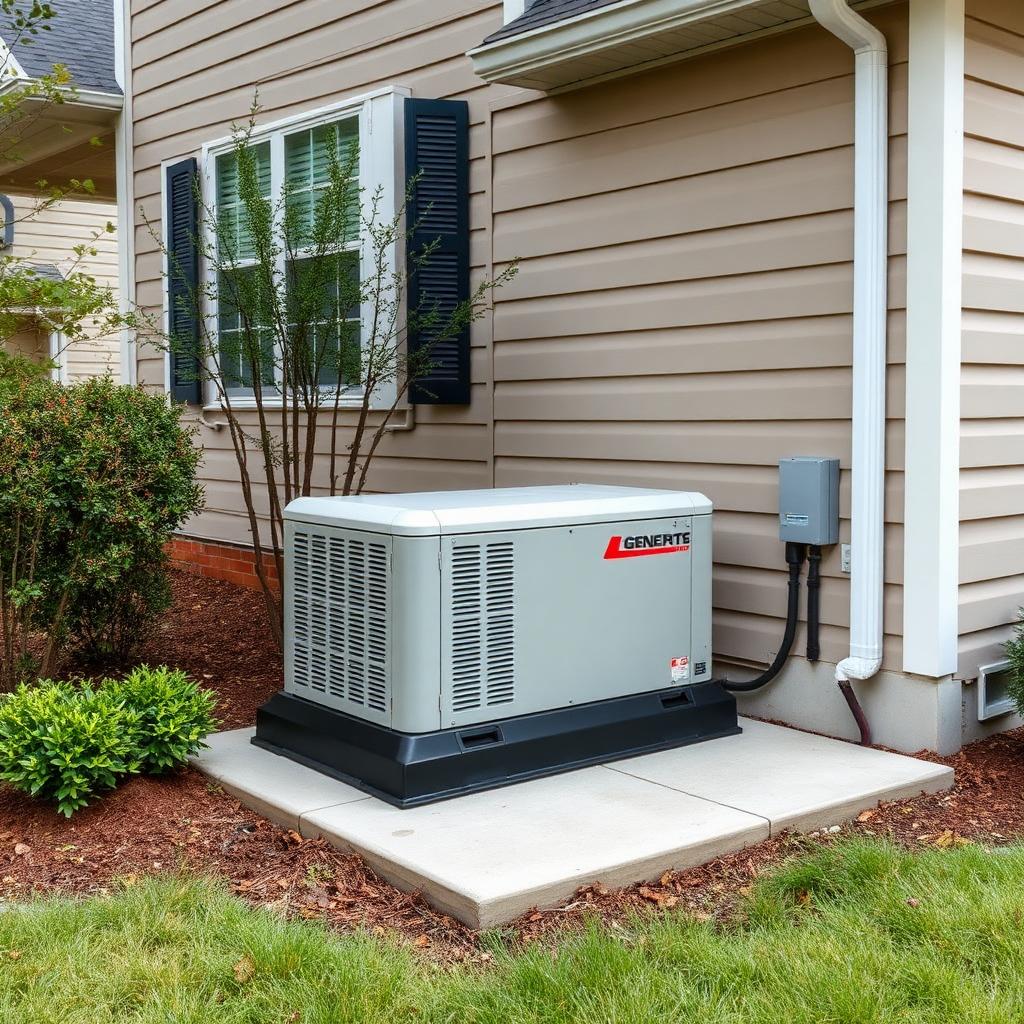
A standby generator is a permanently installed appliance that senses utility loss, starts on its own, and transfers selected loads (or the whole panel) within ten to thirty seconds. The electrical side of the install — pad placement, conduit, transfer switch, and grounding — is what makes the system safe and code-compliant. The fuel side is handled in coordination with a licensed gas plumber when natural gas or propane is the supply.
Apex Power Solutions performs the full electrical scope: load calculation, equipment sizing, transfer switch selection (automatic or service-entrance rated), pad and conduit, generator placement per manufacturer clearance requirements, panel modifications, and commissioning. We handle permits and inspections with your local AHJ.
What's Included
- Whole-home or essential-loads load calculation
- Equipment sizing recommendation (typically 14kW–26kW air-cooled units)
- Concrete or composite pad placement per manufacturer clearance
- Service-entrance or sub-panel transfer switch installation
- Battery, control wiring, and exercise schedule configuration
- First-run commissioning and homeowner walkthrough of monthly self-test
Materials, Equipment & Code
- Generac, Kohler, or Briggs & Stratton air-cooled standby units
- Manufacturer-matched automatic transfer switch (ATS) or service-entrance ATS
- Liquid-tight flexible metal conduit at the generator and rigid conduit between disconnect and panel
- Driven copper ground rod system per NEC 250.52 if a separate grounding electrode is required
Safety & Compliance
- Generator clearance from openings, eaves, and combustibles per manufacturer manual and NEC 445
- ATS bonded and grounded so neutral is switched correctly for the system topology
- Permit pulled and electrical inspection scheduled prior to energizing
Our 4-Step Process
- 1
Call or Submit the Form
Call Apex Power Solutions LLC at +1 (555) 847-3291 or use the form on this page to describe what you need.
- 2
Free On-Site Assessment & Written Estimate
A licensed electrician visits, assesses the work, and delivers a detailed written estimate with no hidden charges.
- 3
Permitted, Code-Compliant Installation
Once approved, our crew completes the work to current NEC and Georgia code, pulling permits where the job requires inspection.
- 4
Final Walkthrough & Cleanup
The lead electrician walks you through every completed item, demonstrates new equipment, and leaves the work area cleaner than we found it.
Questions about Generator Installation
Q: What size generator does a typical Atlanta home need?
A: A whole-home install for a 2,000–3,000 sq ft home with a 200A service typically lands at 18kW–22kW with an automatic load management module so HVAC can run alongside other loads. Smaller essential-loads installs (refrigeration, well pump, a few lighting circuits, internet, garage door) are often well served by a 10kW–14kW unit with a sub-panel ATS.
Q: Do you handle the gas connection?
A: We handle all electrical work and coordinate the gas line with a licensed plumber. On most projects the gas plumber sets the meter upgrade and runs the line to the generator while we complete the electrical, then we commission the unit together.
Q: How loud is a standby generator at idle and at full load?
A: Air-cooled units run roughly 65–70 dBA at the manufacturer's measurement distance — about the level of a dishwasher one room away. We site the unit per manufacturer clearance and consider neighbor windows and outdoor living spaces during placement.
Related Services
- Panel UpgradesReplace outdated, overloaded, or unsafe panels with a properly sized, permitted, and labeled service that meets current code.
- Surge ProtectionPanel-mounted Type 2 SPDs that protect every circuit in the home from utility-side and lightning-induced transients.
- Safety InspectionsDocumented whole-home inspection covering panel, branch circuits, grounding, GFCI/AFCI protection, and code-required smoke and CO devices.